
That first sip from a coffee maker, the daily commute in a vehicle filled with polymer components, or the office powered by cables hidden behind walls—modern life is enabled by plastics. Yet within these everyday materials lies an extraordinary, deliberately engineered feature we rarely notice: formulated fire safety.
For engineers and product designers, fire performance is never an afterthought. It is a calculated outcome of polymer science, defined at the compounding stage where base polymers are transformed into application-ready materials. The objective is precise: to develop plastics that are not only functional and durable, but also inherently resistant to ignition and flame propagation—buying critical time during emergencies.
The Technical Balance in Formulation
The core innovation lies in integration without compromise.
Flame retardancy is achieved by incorporating specialized additives—often mineral-based fillers such as aluminium trihydroxide (ATH) or magnesium dihydroxide (MDH)—directly into the polymer matrix. These materials fundamentally alter the combustion process through endothermic decomposition. When exposed to high temperatures, they absorb significant heat while releasing water vapour, simultaneously cooling the polymer and diluting flammable gases at the flame front.
The technical challenge, however, is substantial. High filler loadings can increase stiffness, reduce impact strength, and complicate processing behaviour. The true benchmark of advanced formulation lies in preserving mechanical integrity, flow characteristics, and long-term durability, while still achieving demanding safety standards such as UL 94 V-0 or IEC 60332 for cable applications.
Why “Halogen-Free” Matters Beyond Flames
The industry’s shift toward halogen-free flame retardants (HFFR) addresses a critical secondary risk: smoke.
In real fire scenarios, traditional halogenated systems can generate dense, corrosive, and toxic smoke, often posing a greater threat than flames themselves. In contrast, halogen-free systems are engineered to significantly reduce smoke density and toxicity. This is why Low Smoke Zero Halogen (LSZH) compounds have become a preferred—and often mandatory—choice in enclosed and high-occupancy environments such as railways, high-rise buildings, data centers, and residential infrastructure.
Where This Engineered Safety Meets Your World
This invisible science quietly underpins modern infrastructure:
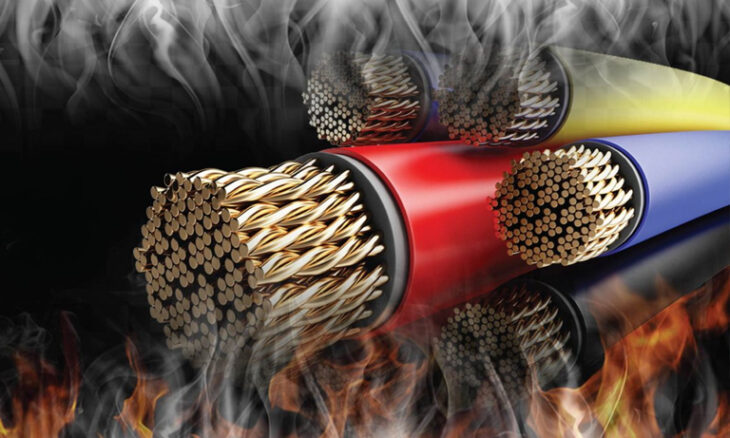
- Wires & Cables: Insulation for EV battery packs, power distribution, and data networks
- Construction Materials: Conduits, insulation panels, and electrical enclosures hidden behind walls
- Consumer Electronics & Appliances: Housings for chargers, routers, and kitchen devices requiring thermal stability
- Automotive Components: Under-hood connectors, battery enclosures, and interior parts meeting strict flame-resistance norms
Organizations focused on advanced material science, such as 20 Microns Nano Minerals Limited, invest heavily in R&D at this intersection of fire safety and performance. By tailoring particle size, surface chemistry, and synergistic additive systems, they enable compounders to meet regulatory demands more efficiently—without sacrificing processability or end-use performance.
Engineering for What Must Never Happen
Ultimately, fire-safe polymer design represents a vital yet largely unseen discipline of engineering. Here, success is measured by absence—by incidents prevented, hazards reduced, and time gained for safe evacuation.
The next time you switch on a device or walk through a building, remember: its safety was not applied later. It was engineered in—particle by particle, molecule by molecule—long before it reached you.
For engineers and material developers:
What has been the most challenging performance trade-off you’ve encountered while designing for fire safety? Share your insights below.
#MaterialsScience #FireSafety #Engineering #Polymers #HalogenFree #ProductDesign #Innovation #AdvancedMaterials