
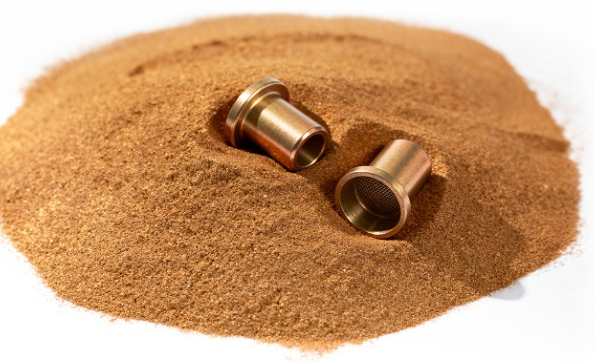
For all the buzz around 3D printing complex, lightweight geometries, the conversation often skips the most critical starting point: the powder. In metal additive manufacturing (AM), the part is only as good as the powder it’s built from. It’s not just a feedstock; it’s the foundational DNA of the final component, dictating everything from tensile strength and fatigue resistance to thermal conductivity and surface finish.
The real frontier in AM R&D isn’t just designing more intricate lattices; it’s engineering the powder particle itself. This means moving beyond standard spherical powders to precise control over particle size distribution, flowability, and—most importantly—microstructure. Imagine a powder grain engineered with a specific internal crystalline structure or a tailored oxide layer that actually enhances final part properties. This isn’t future-gazing; it’s the meticulous work happening in advanced materials labs today.
Companies leading this charge, like Innomet Advanced Materials, understand that innovation in AM is won at the micron level. Their research isn’t focused on selling powder, but on solving fundamental bottlenecks. For instance, how does powder morphology affect packing density in the print bed, and consequently, the consistency of laser melting? Can we design alloys at the powder stage that mitigate residual stress, allowing for larger, more reliable builds? This deep dive into the “why” behind material behaviour is what separates a commodity supplier from a true technology partner.
The implications are vast. For aerospace, it means certifiable components with predictable failure modes. For medical implants, it could enable bio-integrating surfaces directly from the print. For high-temperature energy applications, it unlocks alloys previously thought unprintable.
The next leap in additive won’t come from a software update alone. It will come from the combined expertise of designers who understand the freedom of AM, and material scientists who can dictate the rules of that freedom at the most granular level. The future of manufacturing isn’t just about building things layer by layer—it’s about building better, starting with a single, perfectly engineered grain of powder.
#AdditiveManufacturing #Metal3DPrinting #AdvancedMaterials #R&D #Innovation #MaterialsScience #Engineering #FutureOfManufacturing #Aerospace #MedicalDevices#Innomet#InnometAdvancedMaterials