

The roar from the KSLTA Stadium in Bengaluru was deafening, a wave of sound sweeping across the court. As Dhakshineswar Suresh sealed the final, crushing point against a formidable Dutch side, he clinched more than a match—he secured India’s place in the Davis Cup World Group I playoffs, a historic triumph. This victory, powered by a new generation of Indian talent, is a story of nerve and skill. But look closer, and it’s also a story of engineering—of the unseen, high-tech materials that are reshaping the very tools of modern athletic dominance.
For decades, tennis equipment was a game of compromises. More power often meant less control. A larger sweet spot could lead to a cumbersome, slow racket. Today, that paradigm is shattered, and the key lies in a quiet revolution in high-density materials and precision engineering.
The Hidden Engine in the Modern Racket
At the heart of this revolution is a principle called precise mass distribution. The goal is to concentrate weight exactly where it’s needed—for stability, power, or whip-like speed—without increasing the overall heft of the racket. This is where advanced materials like Tungsten Heavy Alloy (THA) become a game-changer.
Imagine engineers needing to add mass to the frame’s “corners” (the 3 and 9 o’clock positions) to make the racket more stable against the heavy, off-centre hits common in elite doubles or powerful baseline rallies—exactly the kind of pressure Suresh faced against the Netherlands. Using traditional materials, this would create bulky, aerodynamically poor frames. But with THA, they can embed small, incredibly dense modules into the frame. The result?
Increased Moment of Inertia (MOI): The racket resists twisting, drastically expanding the effective sweet spot. This allows a player like Suresh to go for bold returns on fast serves with confidence, knowing mishits will still stay in play.
Optimised Swing Weight: Players can wield a more powerful, stable racket that still feels manoeuvrable for quick volleys and reactive net play—a critical advantage in pivotal doubles rubbers.
Customised Power & Control: The exact placement of these micro-weights allows rackets to be “tuned” to a player’s specific biomechanics and style, creating a truly personalized weapon.
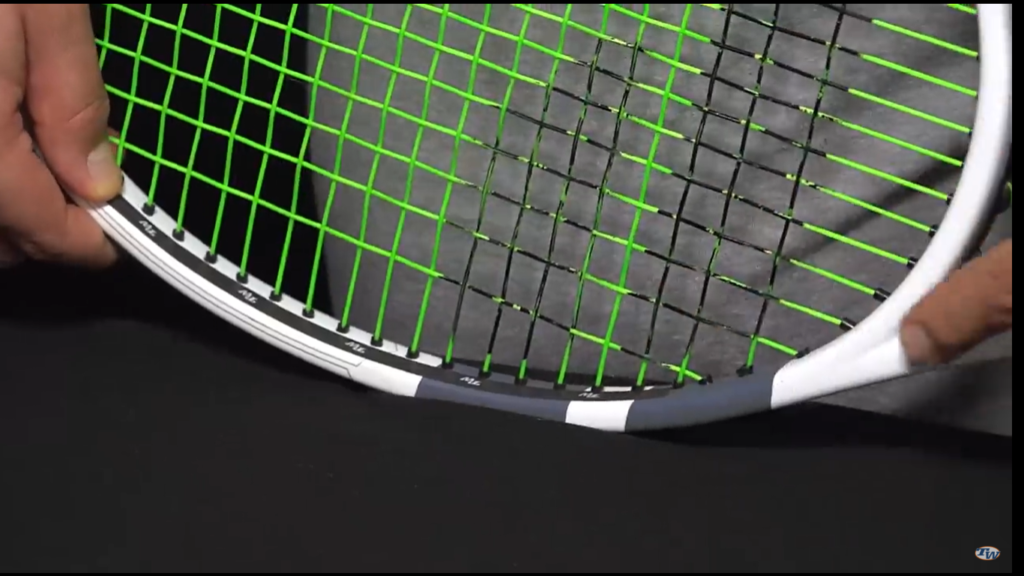
This isn’t science fiction. Leading brands like Yonex, Wilson, and Babolat utilise these principles in their flagship lines. The frames used by today’s champions are masterpieces of material science, where every gram has a purpose.
Beyond Tennis: The Ubiquitous Advantage
The influence of this dense-weighting technology extends far beyond the baseline. THA has become the secret ingredient for precision across sports:
In Golf: Tiny tungsten weights are hidden in clubs. They help designers control the club’s balance perfectly, making drivers more forgiving and putters more accurate. You’ll find this tech in top brands like TaylorMade and Titleist.
In Badminton: To create explosively fast yet stable rackets for smashes that can decide matches, manufacturers embed micro-weights of dense alloys in the frame and handle.
In Athletics: From the weighted cores of elite discuses to the balance points in high-end racing bicycles, the demand for dense, compact mass is universal.
The Champion’s Edge
India’s decisive victory over the Netherlands is a testament to a new breed of athlete: one who merges timeless grit with cutting-edge technology. Players like Dhakshineswar Suresh represent this fusion. They rely on the relentless innovation from material scientists and forward-thinking brands—the kind of advanced engineering pioneered by specialists like Innomet—to gain a measurable edge. An edge that turns a powerful return into an unreturnable winner. An edge that helps secure historic away victories.
As we celebrate the team’s triumph, we are also celebrating the invisible ally in their hands. It’s a win for India’s sporting future, powered by the sophisticated science that is propelling all sports into a faster, more precise, and more powerful era. The game has changed, and it’s being driven by the materials we can barely see, but whose impact is now etched in the history books.
#SportsTechnology #MaterialScience #TungstenHeavyAlloy #DavisCup #EngineeringExcellence #Innomet #AdvancedMaterials