
Mar 4, 2026
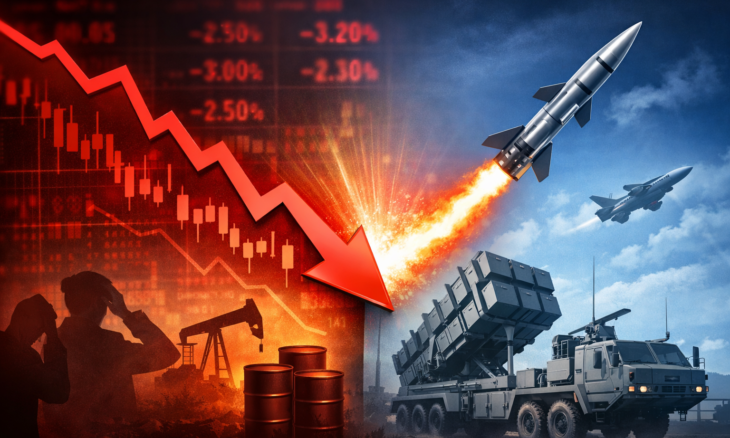
The US-Iran conflict has entered its fifth day, and Indian markets are bleeding. Since the strikes began, the Sensex and Nifty have lost nearly 2.5% each, the rupee has fallen past 91 against the dollar, and foreign investors have pulled out over ₹3,200 crore.
The logic is simple: conflict drives oil prices up, and India imports 85% of its crude. Higher oil means higher inflation, wider fiscal deficits, and delayed rate cuts .
But here is what gets lost in the selling pressure.
Defense Stocks Are Moving Differently
While the broader market tanks, defense counters are showing resilience. The reason is the replenishment cycle. When bunkers are emptied in conflict, they must be refilled. And when nations restock, they don’t delay orders hoping for better rates. They accelerate them. They pay for proven capability.
This is the environment that Innomet Advanced Materials is positioned for.
The Fundamentals Beneath the Sell-Off
Innomet stands as India’s sole private manufacturer of Tungsten Heavy Alloys (THA)—a critical material at the heart of modern defense technology. These remarkable alloys make possible the impossible: kinetic energy penetrators that slice through armoured vehicles, rocket nozzles that endure searing temperatures, and jet vanes that guide missiles with precision through flight.
The company’s expertise flows directly into India’s most advanced missile systems. Innomet supplies THA pre-fragments for the Akash, Astra, Pinaka, and Pralay—weapons that form the backbone of India’s strategic defense. When Operation Sindoor unfolded from May 12-15, the Akash air defense system stood guard, intercepting Pakistani threats with pre-fragments forged by indigenous technology.
The THA division currently contributes about 26% of revenue but carries higher margins than the company’s metal powders business. If its share grows overall profitability could expand meaningfully.
The company has done the groundwork. AS 9100D aerospace certification opens global doors. Exclusive representatives in the US and Israel are actively marketing. Participation at DSEI 2025 (London) and PowderMet 2025 (US) has put Innomet on the map. And the numbers reflect this: 61% YoY revenue growth in H1 FY26 and a target to achieve ₹100 crore within two years.
The Tungsten Challenge—And the Strategic Response
None of this happens in a vacuum. Tungsten prices have surged 3-4x in the last quarter alone, driven by Chinese export controls and global stockpiling amid the conflict. This is a real headwind. Higher input costs mean budgets buy less, and procurement decisions can stall.
But this is precisely why Innomet’s recent acquisition of a 57.5% stake in Swastik Tungsten matters. The acquisition does not eliminate price volatility. Swastik buys at market rates. But it ensures supply continuity. When defence orders eventually flow—and they will, because replenishment is not optional—the bottleneck will be raw material availability. Competitors without backward integration may find themselves unable to deliver. Innomet, by controlling its supply line, can fulfill orders when others cannot.
The Price Disconnect
After touching a 52-week high of ₹216, Innomet’s stock has corrected with the broader market to the ₹70-75 range. Market capitalization now stands near ₹90 Crore.
The sell-off had nothing to do with Innomet’s fundamentals. The company is better certified, better connected, and more vertically integrated than it was six months ago. Yet the market has priced it as if nothing has changed.
What Comes Next
Near-term earnings may reflect tungsten price pressure. That is the reality of raw material cycles. But the strategic question is different: When the replenishment orders finally flow—and with the US-Iran conflict accelerating global defence stockpiling, they will—who will be ready to deliver?
Innomet, with its certified products, export channels, and now secured raw material supply, is building the answer.
The market sold off on war. But for those looking past the noise, the fundamentals remain. As always, investors should conduct their own due diligence and align decisions with individual risk appetite.