
Imagine a heavy-duty truck navigating Indian highways—enduring high temperatures, variable road conditions, continuous load, and long operational cycles. While tyres appear robust externally, their true performance is governed by the internal material design of the rubber compound.
One such advanced material enabling this performance evolution is Nano delaminated kaolin.
Unlike conventional fillers, Nano kaolin operates at the microstructural level, influencing the rubber matrix in a way that significantly enhances performance—without altering the visible characteristics of the tyre.
Functional Role of Nano Kaolin in Tyre Rubber Compounds
In elastomer systems, Nano delaminated kaolin acts as a functional reinforcing filler, contributing beyond mere volume replacement.
- Mechanical Reinforcement and Structural Integrity
The platelet morphology and high aspect ratio of Nano kaolin enable effective stress transfer within the rubber matrix.
- Enhances modulus, stiffness, and tear resistance
- Improves resistance to crack initiation and propagation
- Supports durability under cyclic loading conditions
This is particularly critical for commercial vehicle tyres, where mechanical fatigue is a dominant failure mode.
- Thermal Stability and Heat Resistance
Tyres operating under dynamic conditions generate significant internal heat due to hysteresis.
- Nano kaolin improves thermal stability of the compound
- Helps in maintaining structural integrity at elevated temperatures
- Reduces risk of thermo-oxidative degradation
This contributes to improved reliability during long-haul operations.
- Influence on Vulcanization and Network Formation
During vulcanization, the dispersion and interaction of fillers play a crucial role in defining the final rubber network.
- Nano kaolin can influence cure kinetics and crosslink density
- Promotes formation of a more uniform and stable polymer network
- Enhances consistency in compound performance
A well-developed crosslinked structure directly translates to better mechanical and thermal behaviour.
- Abrasion Resistance and Service Life Enhancement
Surface wear is a key determinant of tyre lifespan.
- Nano kaolin improves abrasion resistance through better filler-polymer interaction .
- Contributes to reduced material loss under frictional forces
- Extends operational life, especially in demanding applications like TBR (Truck & Bus Radial) tyres
What Differentiates Nano Delaminated Kaolin?
The performance advantage lies in its engineered structure.
- Delamination results in ultra-thin platelets with significantly increased surface area
- Enables superior dispersion within the elastomer matrix
- Promotes stronger interfacial interaction between filler and polymer
Compared to conventional kaolin or non-structured fillers, this leads to:
- Improved reinforcement efficiency
- Enhanced mechanical and barrier properties
- More uniform compound behavior
This aligns with the broader advancement of Nanofillers, which are increasingly used to tailor material properties at the microscopic level.
Application Insight: Barrier Properties and Inner Liner Performance
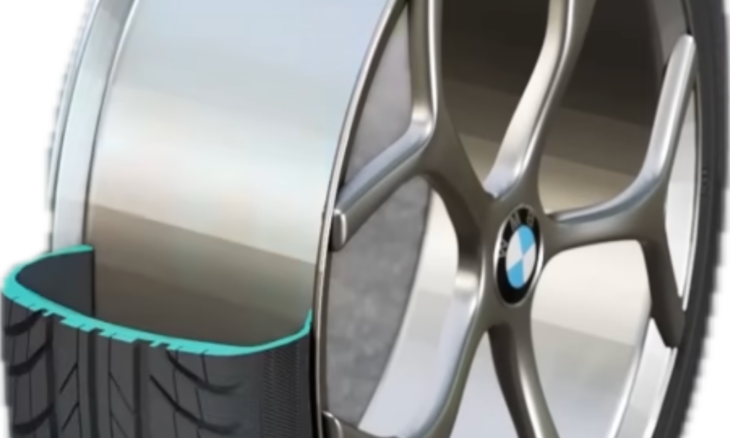
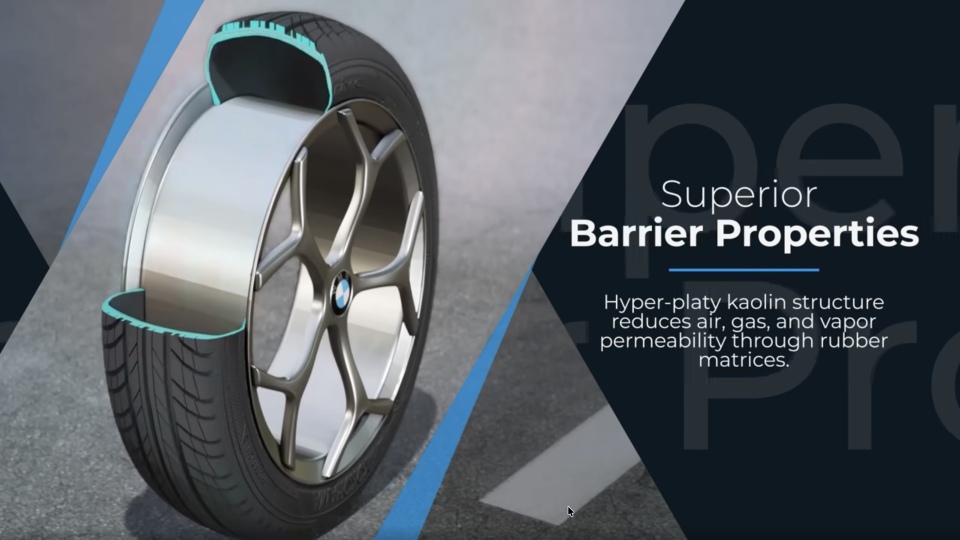
One of the most impactful contributions of Nano delaminated kaolin is in enhancing barrier properties of rubber compounds.
- Platelet structure creates a tortuous path for gas diffusion
- Significantly reduces air and gas permeability
- Improves air retention in tyre inner liners
Additionally:
- Helps protect internal reinforcements such as steel cords from oxidative degradation
- Contributes to maintaining internal pressure stability
- Supports overall tyre efficiency and performance consistency
These characteristics are valuable across both commercial vehicle tyres and passenger car radial (PCR) tyres.
Material Innovation and Industry Ecosystem
Behind high-performance tyres lies a robust ecosystem of advanced material suppliers.
Companies such as 20 Microns Ltd play a vital role in this value chain by delivering engineered mineral solutions with controlled morphology and consistent quality.
Such precision is essential because:
- Rubber compounding is highly sensitive to filler characteristics
- Even minor variations in particle size, structure, or dispersion can influence final tyre performance
- Consistency directly impacts processability and end-use reliability
Through continuous material innovation, such organizations contribute to enabling next-generation tyre technologies.
Conclusion: A Shift Toward Functional Fillers/Additives
Nano delaminated kaolin represents a transition from traditional fillers to performance-driven, functional materials in tyre engineering.
By contributing to:
- Mechanical strength
- Thermal resistance
- Abrasion durability
- Barrier performance
…it enables tyres that are better aligned with real-world operating demands.
While materials like carbon black and silica continue to dominate, advanced fillers such as Nano kaolin are steadily gaining relevance, driven by the need for optimized performance, durability, and efficiency.
In modern tyre design, even microscopic material innovations can translate into significant gains on the road.
#NanoKaolin #TyreTechnology #AdvancedMaterials #DelaminationScience
#RubberEngineering #PerformanceMaterials #MaterialInnovation