
The most striking image from India’s recent examination crisis was not a leaked question paper. It was the sight of thousands of young people rallying behind the uniquely named “Cockroach Janta Party,” demanding accountability for repeated failures in the examination system. What began as internet satire evolved into a serious political movement, eventually culminating in the resignation of Education Minister Dharmendra Pradhan. The protests were triggered by anger over examination irregularities, including the NEET paper leak, and reflected a much deeper frustration among India’s youth: the feeling that merit itself was becoming unreliable.
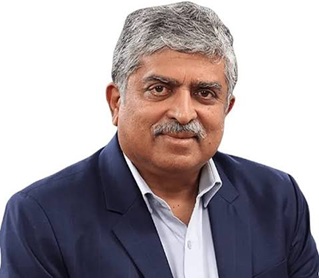
Against this backdrop, the government’s decision to create a task force led by Nandan Nilekani is significant. Nilekani’s involvement suggests that the government may be willing to think beyond administrative fixes and embrace a systemic redesign. After all, this is the man whose work on Aadhaar demonstrated how digital infrastructure can solve problems that appear unmanageable at India’s scale.
The challenge before the task force is not simply preventing the next leak. It is restoring trust.
The Real Issue Is Not Leakage. It Is Architecture.
Every time a paper leak occurs, the conversation quickly turns to criminal networks, corrupt officials, or lax security. Those are symptoms, not causes.
The deeper issue is that India’s examination system still operates on a twentieth-century model while serving twenty-first-century scale. Millions of candidates sit for examinations that depend on a physical chain of custody extending from question setters to printers, transporters, storage facilities, local administrators and examination centres. Every node in that chain creates a potential point of failure.
The assumption underlying the current model is that secrecy can be maintained across thousands of people and hundreds of locations for weeks or months. That assumption is becoming increasingly unrealistic.
The task force is therefore likely to focus not merely on strengthening security but on redesigning the system so that there is far less to leak in the first place.
India Needs for Exams What UPI Did for Payments
The most promising lens through which to view the problem is digital public infrastructure.
Before UPI, the challenge was moving money securely between millions of people. Before Aadhaar, it was establishing identity at scale. In both cases, the solution was not more paperwork but a new digital architecture.
Examinations today face a similar challenge: how do you establish trust at scale?
This is where the Nilekani’s experience could be invaluable. Instead of treating exam administration as an isolated government function, the task force could view it as a national trust infrastructure. In such a model, examinations would move from paper-based trust to digital trust.
Question papers would exist in encrypted environments. Access would be tightly controlled. Distribution would occur digitally. Monitoring would happen in real time.
The objective would not be to create a more secure paper system. It would be to reduce dependence on paper altogether.
The Most Radical Reform May Be Eliminating the Question Paper
The biggest vulnerability in any examination is the existence of a single master paper.A single document carries enormous value because millions of futures depend on it. Technology offers a fundamentally different possibility.
Imagine an examination generated from a massive validated question bank. Each candidate receives a unique combination of questions, calibrated to maintain identical difficulty standards. The examination remains fair, but there is no single paper that can be leaked. This is how many global testing systems already function.
This is probably the most important shift the task force could recommend.
Shorten the Window of Vulnerability
Today’s examination processes often involve weeks of logistical activity before candidates enter the examination hall. That timeline creates opportunity.
A digitally distributed system could dramatically compress the risk window. Examination content could be encrypted until minutes before the test begins. Access could require multiple layers of authentication. Decryption keys could be released only when candidates are seated.
The principle is simple: nobody should be able to see the examination paper before the examination starts. Banks already protect trillions of rupees using similar principles. There is little reason why examinations cannot adopt comparable standards.
Move From Investigation to Prediction
What is remarkable about most paper leaks is that authorities usually discover them after students have already been affected. The future lies in predictive monitoring rather than post-facto investigation.
Artificial intelligence can identify unusual access patterns, suspicious downloads, abnormal system behaviour and other indicators of compromise. Examination authorities could be alerted before a breach becomes a national crisis.
In other words, the system should behave less like a filing cabinet and more like a modern cybersecurity platform.
The Bigger Opportunity Is Assessment Reform
The task force may ultimately conclude that examination integrity cannot be separated from examination design. A society that places enormous weight on a single test inadvertently creates massive incentives for cheating, organised fraud and paper leaks.
The long-term solution may involve diversifying assessment itself. Adaptive testing, multiple testing windows, continuous evaluation can reduce the stakes associated with any one examination event. When a student’s future does not depend entirely on one paper on one morning, the economics of leaks change dramatically.
The Political Moment Matters
That is why the resignation of a Union Minister became politically significant. It signalled that exam integrity is no longer a niche administrative issue. It has become a mainstream governance issue.
The Nilekani task force therefore carries a responsibility that extends beyond technology. Its real mandate is rebuilding confidence among students and families.
A Once-in-a-Generation Opportunity
India has a habit of responding to crises with incremental fixes. More guards. More rules. More committees. This moment calls for something more ambitious.
The country that built Aadhaar and UPI has the technological capability to build the world’s most trusted examination infrastructure. If the task force approaches the problem as a question of digital architecture rather than administrative procedure, India could emerge from the current crisis with a model that other countries follow.
The goal should not be to stop the next paper leak. The goal should be to create a system where leaks no longer have the power to undermine trust. That would be a reform worthy of the moment—and worthy of Nilekani’s leadership